前言 RxJS 源码解读之 Scheduler 。
在前面的文章中,我们讲了 RxJS 核心的几个概念,并且分析了它们源码中的实现。
本文我们讲 RxJS 中另一位维度的东西,它称之为 Scheduler 。
正文 概念 Scheduler ,在英文中的意思为调度器,一听到调度器我们可能就有点害怕了,跟这东西有关的都是让人头疼的东西,比如 Linux 内核中的调度器,用来调度进程。
在 RxJS 中,调度器是一个独立的概念,他其实完全可以单独拎出来使用。 RxJS 的调度器,本质就是决定函数执行的时机。
再简单点讲,它其实就是包装了诸如 setInterval 、 Promise.then 、 requestAnimateFrame 等的 API 。
源码 Scheduler 和 Action 在 RxJS 中,调度器有两个核心的基类,一个是 Scheduler 、 一个是 Action 。
这两个基类的实现都非常的简单,源码如下:
1
2
3
4
5
6
7
8
9
10
11
12
13
14
15
16
17
18
19
20
21
22
23
24
25
26
27
28
29
30
31
32
export class Scheduler implements SchedulerLike { public static now : () => number = dateTimestampProvider.now constructor ( private schedulerActionCtor : typeof Action , now : () => number = Scheduler .now, ) { this .now = now } public now : () => number public schedule<T>( work : (this : SchedulerAction <T>, state?: T void , delay : number = 0 , state?: T, ): Subscription { return new this .schedulerActionCtor <T>(this , work).schedule (state, delay) } } export class Action <T> extends Subscription { constructor (scheduler : Scheduler , work : (this : SchedulerAction<T>, state?: T) => void super () } public schedule (state?: T, delay : number = 0 ): Subscription { return this } }
这里可以看到 Action 实现了 Subscription ,也就是 Action 应该也有一个取消订阅的操作,这个后面会说到,而 Scheduler 实现了 SchedulerLike 接口,这个接口抽象了类调度器的类型:
1
2
3
4
5
6
7
8
9
10
11
12
13
14
15
16
17
18
19
20
export interface SchedulerLike extends TimestampProvider { schedule<T>( work : (this : SchedulerAction <T>, state : T void , delay : number , state : T, ): Subscription schedule<T>( work : (this : SchedulerAction <T>, state?: T void , delay : number , state?: T, ): Subscription schedule<T>( work : (this : SchedulerAction <T>, state?: T void , delay?: number , state?: T, ): Subscription } export interface TimestampProvider { now (): number }
这里的 TimestampProvider 可以先忽略,在 Scheduler 的源码中,基本用不到这个属性。
回到 Scheduler 类,Scheduler 会通过构造函数持有一个 Action 的类(注意,这里是持有一个 Action 类,而不是一个 Action 类的实例),然后在 schedule 中实例化持有的 Action 类, 即代码中的 new this.schedulerActionCtor<T>(this, work) ,接着调用 Action 的 schedule 并返回自身,前面我们说过 Action 继承自 Subscription 。所以我们在通过 Scheduler.prototype.schedule 得到的对象其实就是一个 Action 对象。
我们可以简单地用箭头来描述此时的调用流向:
1
2
3
Scheduler.schedule -> new Action -> Action.schedule
需要着重注意的是:我们的调度函数( work )是保存在 Action 中的,这点很重要。
在 RxJS 中,提供了四种不同的调度器,分别是 asyncScheduler 、 asapScheduler 、 queueScheduler 、 animationFrameScheduler ,需要注意,这些导出的对象已经是类的实例了,可以直接使用,不能通过 new 来调用。比如 asyncScheduler ,它的导出是下面这样子的:
1 export const asyncScheduler = new AsyncScheduler (AsyncAction )
其中 AsapScheduler 、 QueueScheduler 和 AnimationFrameScheduler 都是从 AsyncScheduler 派生出来的,所以我们先看一下 AsyncScheduler 的实现。
AsyncScheduler 和 AsyncAction AsyncScheduler 的实现本质就是包装了 setInterval 。我们先看 AsyncScheduler 的整体实现:
1
2
3
4
5
6
7
8
9
10
11
12
13
14
15
16
17
18
19
export class AsyncScheduler extends Scheduler { public actions : Array <AsyncAction <any >> = [] public _active : boolean = false public _scheduled : TimerHandle | undefined constructor (SchedulerAction : typeof Action , now : () => number = Scheduler .now super (SchedulerAction , now) } public flush (action : AsyncAction <any >): void { } }
可以看到 AsyncScheduler 并没有重写 Scheduler 的 schedule ,所以当我们使用 schedule 的时候还是调用的 Scheduler 的 schedule 实现。 AsyncScheduler 还多了一个 flush 方法,这里我们先不管。
接着我们来看 AsyncAction 的实现:
1
2
3
4
5
6
7
8
9
10
11
12
13
14
15
16
17
18
19
20
21
22
23
24
25
26
27
28
29
30
31
32
33
34
35
36
37
export class AsyncAction <T> extends Action <T> { public id : TimerHandle | undefined public state?: T public delay : number protected pending : boolean = false constructor ( protected scheduler : AsyncScheduler , protected work : (this : SchedulerAction<T>, state?: T) => void , ) { super (scheduler, work) } public schedule (state?: T, delay : number = 0 ): Subscription {} protected requestAsyncId ( scheduler : AsyncScheduler , _id?: TimerHandle , delay : number = 0 , ): TimerHandle {} protected recycleAsyncId ( _scheduler : AsyncScheduler , id?: TimerHandle , delay : number | null = 0 , ): TimerHandle | undefined {} public execute (state : T, delay : number ): any {} protected _execute (state : T, _delay : number ): any {} unsubscribe ( }
看起来多了好多方法,我们可以先从重写的 Action 的 schedule 方法的位置开始:
1
2
3
4
5
6
7
8
9
10
11
12
13
14
15
16
17
18
19
20
21
22
23
24
25
26
27
28
29
30
31
32
33
34
35
36
37
38
39
40
export class AsyncAction <T> extends Action <T> { public schedule (state?: T, delay : number = 0 ): Subscription { if (this .closed ) { return this } this .state = state const id = this .id const scheduler = this .scheduler if (id != null ) { this .id = this .recycleAsyncId (scheduler, id, delay) } this .pending = true this .delay = delay this .id = this .id ?? this .requestAsyncId (scheduler, this .id , delay) return this } }
这里有几个重要的点:
通过 Scheduler 的 schedule 来调用,每个 Action 只会执行一次,如果想获得类似 setInterval 的效果,需要手动在函数内部使用 this.schedule 来重新调用。
1 2 3 4 5 6 7 8 9 10 11 12 13 14 15 asyncScheduler.schedule (() => { console .log ('hello world!' ) }, 2000 ) let workasyncScheduler.schedule ( (work = () => { console .log ('hello world!' ) asyncScheduler.schedule (work, 2000 ) }), 2000 , )
在 AsyncScheduler 内部中使用的是 setInterval 而非 setTimeout 作为底层实现,对此 RxJS 官方的解释是: 单个 setInterval 的执行间隔比起多个 setTimeout 的间隔更精确。
However, JS runtimes and timers distinguish between intervals achieved by serial setTimeout calls vs. a single setInterval call. An interval of serial setTimeout calls can be individually delayed, which delays scheduling the next setTimeout, and so on. setInterval attempts to guarantee the interval callback will be invoked more precisely to the interval period, regardless of load.
所有的 Scheduler 在内部都不会自动调用 unsubscribe 来取消自身的订阅,这是因为即使在多次的调度中,我们可能会通过额外的定时器来启动调度,比如:
1 2 3 4 5 6 7 asyncScheduler.schedule (function ( setTimeout (() => { this .schedule (undefined , 2000 ) }, 1000 ) }, 2000 )
所以如果你只想执行单次的调度,最好在调度函数执行结束后调用 unsubscribe ,或者对返回的对象在合适的时机调用 unsubscribe :
1
2
3
4
5
6
7
8
9
10
11
12
13
const subscription = asyncScheduler.schedule (function ( this .unsubscribe () }, 2000 ) subscription.unsubscribe ()
回到 schedule 实现中,我们发现它主要关联了两个函数,一个是 requestAsyncId ,一个是 recycleAsyncId ,根据名字我们大致可以知道, requestAsyncId 应该就是请求调度,然后返回一个该调度的 id ,而 recycleAsyncId 大致是回收一个调度,这里的回收可以是取消调度器或者让调度器继续执行(什么都不做)。
我们先看 requestAsyncId :
1
2
3
4
5
6
7
8
9
export class AsyncAction <T> extends Action <T> { protected requestAsyncId ( scheduler : AsyncScheduler , _id?: TimerHandle , delay : number = 0 , ): TimerHandle { return intervalProvider.setInterval (scheduler.flush .bind (scheduler, this ), delay) } }
可以看到它调用的不是原生的 setInterval ,而是在一个 intervalProvider 对象上的 setInterval ,我们看一下 intervalProvider 的实现:
1
2
3
4
5
6
7
8
9
10
11
12
13
14
export const intervalProvider : IntervalProvider = { setInterval (handler : () => void , timeout?: number , ...args const { delegate } = intervalProvider if (delegate?.setInterval ) { return delegate.setInterval (handler, timeout, ...args) } return setInterval (handler, timeout, ...args) }, clearInterval (handle ) { const { delegate } = intervalProvider return (delegate?.clearInterval || clearInterval )(handle as any ) }, delegate : undefined , }
可以发现默认情况下就是调用的 setInterval ,但是 RxJS 提供了一个 delegate 委派对象,我们可以通过它来覆盖默认的实现,比如:
1 2 3 4 5 6 7 8 9 10 11 12 13 intervalProvider.delegate = { setInterval (handler, timeout, ...args ) { return setInterval ( (...args ) => Promise .resolve ().then (() => handler (...args)), timeout, ...args, ) }, clearInterval (handler ) { clearInterval (handler) }, }
当然很多时候我们并不会去覆盖默认的实现,所以 requestAsyncId 可以简单重写为:
1
2
3
4
5
6
7
8
9
export class AsyncAction <T> extends Action <T> { protected requestAsyncId ( scheduler : AsyncScheduler , _id?: TimerHandle , delay : number = 0 , ): TimerHandle { return setInterval (scheduler.flush .bind (scheduler, this ), delay) } }
可以看到它的目标调度函数是 Scheduler 的 flush ,这可能就有点让人不解了,不是说需要调度的函数保存在了 Action 上吗,怎么又跑去调用 Scheduler 的方法了,别急,我们先看 recycleAsyncId 是如何实现的:
1
2
3
4
5
6
7
8
9
10
11
12
13
14
15
16
17
18
19
export class AsyncAction <T> extends Action <T> { protected recycleAsyncId ( _scheduler : AsyncScheduler , id?: TimerHandle , delay : number | null = 0 , ): TimerHandle | undefined { if (delay != null && this .delay === delay && this .pending === false ) { return id } if (id != null ) { intervalProvider.clearInterval (id) } return undefined } }
这段逻辑主要包括两个部分,一个是复用定时器,即不清除定时器,另一个就是清除定时器了,在前面我们说过, Action 中调用 work 是单次的,如果需要重复调度,我们需要手动的在函数内部使用 this.schedule 来重新调度。在判断中我们可以知道,只要延迟时间相同,那么就不会清除掉定时器,即:
1
2
3
4
5
6
7
console .log ('schedule before.' )asyncScheduler.schedule <void >(function ( console .log ('schedule' ) this .schedule (undefined , 3000 ) }, 3000 ) console .log ('schedule after' )
理解了这两个函数之后,我们再回到 Scheduler 看它的 flush 实现:
1
2
3
4
5
6
7
8
9
10
11
12
13
14
15
16
17
18
19
20
21
22
23
24
25
26
27
28
29
30
31
32
33
34
35
36
37
export class AsyncScheduler extends Scheduler { public flush (action : AsyncAction <any >): void { const { actions } = this if (this ._active ) { actions.push (action) return } let error : any this ._active = true do { if ((error = action.execute (action.state , action.delay ))) { break } } while ((action = actions.shift ()!)) this ._active = false if (error) { while ((action = actions.shift ()!)) { action.unsubscribe () } throw error } } }
这里需要搞清一个点,为什么需要用 actions 来保存同个 Action 的多个实例?
在需要调度的函数的内部,我们可能会通过 this.schedule 来创建一个新的调度,在 AsyncScheduler 中,这个 actions 实际上并不会有值,因为每次我们通过 this.schedule 创建一个新的调度的时候,它会有两种情况,复用原来的调度器或者取消原来的调度器然后再创建一个,这两种都是延迟到接下来的宏任务中执行,而 flush 本身是同步执行的,所以在 AsyncScheduler 下, actions 不会有值, 即下面的代码不会执行到:
1
2
3
4
5
6
7
8
9
10
11
12
13
export class AsyncScheduler extends Scheduler { public flush (action : AsyncAction <any >): void { const { actions } = this if (this ._active ) { actions.push (action) return } } }
在 AsyncScheduler 中, actions 属性用不到,但是在 AsyncScheduler 派生出的几种调度器中, actions 属性就发挥了作用,它为多个任务在同一个调度中 进行统一处理提供了代码上的能力。
回到 flush 实现,在上面我们标注了核心为执行 Action 的 execute 方法,我们看一下它的实现:
1
2
3
4
5
6
7
8
9
10
11
12
13
14
15
16
17
18
19
20
21
22
export class AsyncAction <T> extends Action <T> { public execute (state : T, delay : number ): any { if (this .closed ) { return new Error ('executing a cancelled action' ) } this .pending = false const error = this ._execute (state, delay) if (error) { return error } else if (this .pending === false && this .id != null ) { this .id = this .recycleAsyncId (this .scheduler , this .id , null ) } } }
这段代码还没有接触到执行 work 的核心, work 实际上是在 _execute 中执行的:
1
2
3
4
5
6
7
8
9
10
11
12
13
14
15
16
17
18
export class AsyncAction <T> extends Action <T> { protected _execute (state : T, _delay : number ): any { let errored : boolean = false let errorValue : any try { this .work (state) } catch (e) { errored = true errorValue = e ? e : new Error ('Scheduled action threw falsy error' ) } if (errored) { this .unsubscribe () return errorValue } } }
RxJS 很多这种 execute 和 _execute 的设计,目的都是为了解耦一些操作,方便后续的子类进行重写的时候能够在最小的范围内进行。
到这里,我们就把 AsyncScheduler 的流程走完了,可能你会觉得很乱,我们可以梳理一下它的调用流程:
1
2
3
4
5
6
7
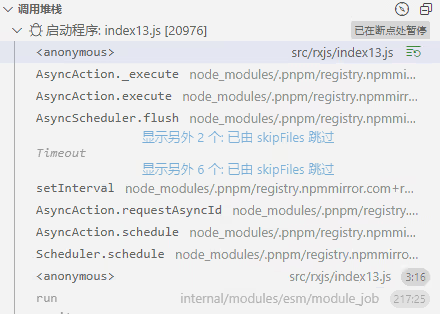
AsyncScheduler.schedule -> new AsyncAction -> AsyncAction.schedule -> AsyncAction.requestAsyncId (开始调度,目标执行函数为 flush ,此时 pending 置为 true ) -> AsyncScheduler.flush (调度(等待)结束,开始执行 flush ,此时 pending 置为 false ) -> AsyncAction.execute -> AsyncAction._execute (执行实际 work 函数的地方)
在 Chrome 的 debug 中,我们也能清晰的看到对应的调用栈:
另外作为一个 Subscription ,它的 unsubscribe 其实并不复杂:
1
2
3
4
5
6
7
8
9
10
11
12
13
14
15
16
17
18
19
20
21
22
23
24
25
26
27
28
29
export class AsyncAction <T> extends Action <T> { unsubscribe ( if (!this .closed ) { const { id, scheduler } = this const { actions } = scheduler this .work = this .state = this .scheduler = null ! this .pending = false arrRemove (actions, this ) if (id != null ) { this .id = this .recycleAsyncId (scheduler, id, null ) } this .delay = null ! super .unsubscribe () } } }
对于 AsyncAction 来说,如果已经在调度状态了,那么核心就是取消掉定时器。
AsapScheduler 和 AsapAction 可能很多人和我一样,在第一次看到这个的实现的时候,一头污水, Asap ,什么意思?
在英文中,它是 as soon as possible 的缩写,意思是“尽可能快的”。
比如最近 cs2 转会期间猪猪对宝蓝被下放一事发出建议,希望有队伍能尽快签下他:
(PS: NIP 终于不再执着 60 万了,猪猪你也不看看宝蓝最近打的什么鬼样子,被 bench 完全不意外,意外的是竟然这么久才 bench …)
不要被它的名字吓到,在内部中它其实就是包装了 Promise.then 而已。
如果你懂一点浏览器宏任务微任务的八股文的话,应该就能理解 Promise.then 比 setTimeout 或者 setInterval 快的原因了。
AsapScheduler 和 AsapAction 分别继承了 AsyncScheduler 和 AsyncAction ,也就是是说它们的执行流程大体是相似的。
我们先看下 AsapScheduler 如何继承 AsyncScheduler :
1
2
3
export class AsapScheduler extends AsyncScheduler { public flush (action?: AsyncAction <any >): void {} }
这里我们先不管它是如何重写 flush 方法的,我们再看下 AsapAction 是如何继承的:
1
2
3
4
5
6
7
8
9
10
11
12
13
14
15
16
17
18
19
export class AsapAction <T> extends AsyncAction <T> { constructor ( protected scheduler : AsapScheduler , protected work : (this : SchedulerAction<T>, state?: T) => void , ) { super (scheduler, work) } protected requestAsyncId ( scheduler : AsapScheduler , id?: TimerHandle , delay : number = 0 , ): TimerHandle {} protected recycleAsyncId ( scheduler : AsapScheduler , id?: TimerHandle , delay : number = 0 , ): TimerHandle | undefined {} }
可以看到重写了 requestAsyncId 和 recycleAsyncId 方法。
从 AsyncScheduler 执行的过程,我们先看 requestAsyncId 的实现:
1
2
3
4
5
6
7
8
9
10
11
12
13
14
15
16
17
18
19
20
21
22
23
24
export class AsapAction <T> extends AsyncAction <T> { protected requestAsyncId ( scheduler : AsapScheduler , id?: TimerHandle , delay : number = 0 , ): TimerHandle { if (delay !== null && delay > 0 ) { return super .requestAsyncId (scheduler, id, delay) } scheduler.actions .push (this ) return ( scheduler._scheduled || (scheduler._scheduled = immediateProvider.setImmediate ( scheduler.flush .bind (scheduler, undefined ), )) ) } }
这里使用的是一个 setImmediate 的函数,和 setInterval 一样, RxJS 封装了它们,并且我们也能通过 delegate 对象来覆盖。
1 2 3 4 5 6 7 8 9 10 11 12 13 14 15 16 17 18 19 20 21 22 23 24 25 26 27 28 29 30 31 32 33 34 import type { TimerHandle } from './timerHandle' const { setImmediate, clearImmediate } = Immediate export const immediateProvider : ImmediateProvider = { setImmediate (...args ) { const { delegate } = immediateProvider return (delegate?.setImmediate || setImmediate)(...args) }, clearImmediate (handle ) { const { delegate } = immediateProvider return (delegate?.clearImmediate || clearImmediate)(handle as any ) }, delegate : undefined , } export const Immediate = { setImmediate (cb : () => void ): number { const handle = nextHandle++ activeHandles[handle] = true if (!resolved) { resolved = Promise .resolve () } resolved.then (() => findAndClearHandle (handle) && cb ()) return handle }, clearImmediate (handle : number ): void { findAndClearHandle (handle) }, }
在前面我们说过, AsapScheduler 实际上就是封装了 Promise.then , Promise.then 和 setInterval 的区别还是很大的,除了执行时机的不同之外, setInterval 调用之后会返回一个 id ,后面我们可以通过 clearInterval 来取消掉这个定时器,而 Promise.then 是没有这个原生的功能的,在 RxJS 中,通过计数器以及一个用来标记的字面对象来实现:
1 2 3 4 5 6 7 8 9 10 11 12 13 14 15 16 17 18 19 20 21 22 23 24 25 26 27 28 29 30 31 32 33 34 35 36 37 38 39 40 41 42 let nextHandle = 1 let resolved : Promise <any >const activeHandles : { [key : number ]: any } = {}function findAndClearHandle (handle : number boolean { if (handle in activeHandles) { delete activeHandles[handle] return true } return false } export const Immediate = { setImmediate (cb : () => void ): number { const handle = nextHandle++ activeHandles[handle] = true if (!resolved) { resolved = Promise .resolve () } resolved.then (() => findAndClearHandle (handle) && cb ()) return handle }, clearImmediate (handle : number ): void { findAndClearHandle (handle) }, }
原生的 Promise 并没有取消这一说法, Promise 是对“未来”的一种承诺,要么成功,要么失败, RxJS 通过一个唯一的 id 来标记一个 Promise.then 的回调,它的简化代码类似下面这样:
1
2
3
4
5
6
7
8
9
10
11
12
13
14
15
16
17
18
19
20
let pId = 1 let map = {}let resolved = Promise .resolve ()const cb = (resolved.then (() => { if (map[pId]) { cb () delete map[pId] } }) map[pId] = true delete map[pId]
实际上, Promise.then 确实执行了,但是通过包括一段对标记的判断来实现“取消”调度,实际上是没执行到调度( && 操作符短路了)。
接下来我们看一下 recycleAsyncId 的实现:
1
2
3
4
5
6
7
8
9
10
11
12
13
14
15
16
17
18
19
20
21
22
23
24
25
export class AsapAction <T> extends AsyncAction <T> { protected recycleAsyncId ( scheduler : AsapScheduler , id?: TimerHandle , delay : number = 0 , ): TimerHandle | undefined { if (delay != null ? delay > 0 : this .delay > 0 ) { return super .recycleAsyncId (scheduler, id, delay) } const { actions } = scheduler if (id != null && actions[actions.length - 1 ]?.id !== id) { immediateProvider.clearImmediate (id) if (scheduler._scheduled === id) { scheduler._scheduled = undefined } } return undefined } }
这里可能需对两个重写的函数配合起来理解。
在 AsapScheduler 中,在一次同步执行的过程中产生的新的调度都会共用一个调度器的 id ,而这个 id 挂载在父类 AsyncScheduler 的 _schedule 属性上。
之前我们说过 AsyncScheduler 中暂时使用不到 _schedule 属性,因为对于 AsyncScheduler ,每次调度都会产生新的调度器 id ,而 AsapScheduler 则是共用一个调度器 id ,在一次调度中对于所有嵌套的调度统一批处理。我们可以用下面的例子来解释:
1 2 3 4 5 6 7 8 9 10 11 12 13 14 15 16 asapScheduler.schedule (function ( asapScheduler.schedule (function ( console .log ('3' ) }) console .log ('1' ) asapScheduler.schedule (function ( console .log ('4' ) }) console .log ('2' ) })
上面的代码会输出 1 2 3 4 ,即最外层的 schedule 使用一次 Promise.then 调度,内部两个 schedule 使用一次 Promise.then ,即合并执行。
这也符合原生 Promise.then 的执行顺序,如果在一个微任务中继续启动一个微任务,那么新的微任务将会放到当前微任务的后面,在当前微任务执行完成后立即执行新的微任务,上面的写法就类似如下 Promise.then 的写法:
1
2
3
4
5
6
7
8
9
10
11
12
Promise .resolve ().then (() => { Promise .resolve ().then (() => { console .log ('3' ) }) console .log ('1' ) Promise .resolve ().then (() => { console .log ('4' ) }) console .log ('2' ) })
接着我们回到 AsapScheduler 中,看看 flush 是如何重写的:
1
2
3
4
5
6
7
8
9
10
11
12
13
14
15
16
17
18
19
20
21
22
23
24
25
26
27
28
29
30
31
32
33
34
35
36
export class AsapScheduler extends AsyncScheduler { public flush (action?: AsyncAction <any >): void { this ._active = true const flushId = this ._scheduled this ._scheduled = undefined const { actions } = this let error : any action = action || actions.shift ()! do { if ((error = action.execute (action.state , action.delay ))) { break } } while ((action = actions[0 ]) && action.id === flushId && actions.shift ()) this ._active = false if (error) { while ((action = actions[0 ]) && action.id === flushId && actions.shift ()) { action.unsubscribe () } throw error } } }
可能你在看这个实现的时候有点晕,其实只要明白以下的两点
在传入的 Action 是 AsyncAction 时,此时 actions 数组可能为空也可能不为空,这取决于你在传入的 AsyncAction 中所进行的动作,但是可以肯定的是,这个 AsyncAction 前面一定不会有 AsapAction 了,因为我们处在一个宏任务中,如果此时它的前面存在未执行的 AsapAction ,那么这是矛盾的,因为这些 AsapAction 应该在上一个微任务队列就被清空了。
在传入的 Action 是 AsapAction 时,此时 actions 可能为空也可能不为空,这取决于你在传入的 AsapAction 中所进行的动作。但是 actions 一定不会有 AsyncAction 实例,这是因为 AsyncAction 只会在 flush 的时候传入,并不会手动加入到 actions 中。
这个方法其实就是兼容了 AsyncScheduler 的 flush 实现,并且额外实现了批处理本次微任务的全部 Action 的功能。
AnimationFrameScheduler 和 AnimationFrameAction 这两者的实现和 AsapScheduler 和 AsapAction 几乎一样,唯一的区别就是从 Promise.then 切换到了 requestAnimateFrame ,所以这里就不讲了。
需要注意的一点是, AnimationFrameScheduler 似乎有个遗留的 bug ,在之前修复 AsapScheduler 的时候没有顺道修好像?
不过这也只是我的猜测,贴上相关的 asapScheduler: Scheduling inside of an executing action only works once
对于 AnimationFrameScheduler ,现在的问题是如果嵌套使用的话会导致只执行一次嵌套的调度,如下图所示:
而如果使用原生的 requestAnimateFrame 则没有这个问题,如下图:
我也在上面的 issue 中询问了维护者,看他是怎么回复的吧。
QueueScheduler 和 QueueAction QueueScheduler 是一种“同步”的 AsapScheduler ,可能这句话会让你觉得很懵逼。
在 AsapScheduler 中,我们会把任务延迟到微任务队列中执行,如果在微任务中继续启动 AsapScheduler 的话,那么这些任务会被放到 actions 属性中,然后在当前 Action 执行完毕之后,继续执行 actions 中的剩余 Action 。
而 QueueScheduler 则是立即执行任务,如果在执行的任务中继续调用 QueueScheduler ,那么会放到 actions 属性中,在当前 Action 执行完毕之后继续执行 actions 中的剩余 Action 。
我们可以用下面的代码来表示两者的区别:
1
2
3
4
5
6
7
8
9
10
11
12
13
14
15
16
17
18
19
20
21
22
23
24
25
26
27
28
29
30
31
32
33
34
35
36
37
38
39
40
41
console .log ('before' )asapScheduler.schedule (() => { console .log ('1' ) asapScheduler.schedule (() => { console .log ('2' ) }) asapScheduler.schedule (() => { console .log ('3' ) }) console .log ('4' ) }) console .log ('after' )console .log ('before' )queueScheduler.schedule (() => { console .log ('1' ) queueScheduler.schedule (() => { console .log ('2' ) }) queueScheduler.schedule (() => { console .log ('3' ) }) console .log ('4' ) }) console .log ('after' )
QueueScheduler 只是继承了 AsyncScheduler 而已,并没有重写什么:
1 export class QueueScheduler extends AsyncScheduler {}
这里我们的重点主要是 QueueAction ,它继承了 AsyncAction :
1
2
3
4
5
6
7
8
9
10
11
12
13
14
15
16
17
18
19
20
21
22
23
24
25
26
27
28
29
30
31
32
33
34
35
36
37
38
39
40
41
42
43
44
export class QueueAction <T> extends AsyncAction <T> { constructor ( protected scheduler : QueueScheduler , protected work : (this : SchedulerAction<T>, state?: T) => void , ) { super (scheduler, work) } public schedule (state?: T, delay : number = 0 ): Subscription { if (delay > 0 ) { return super .schedule (state, delay) } this .delay = delay this .state = state this .scheduler .flush (this ) return this } public execute (state : T, delay : number ): any { return delay > 0 || this .closed ? super .execute (state, delay) : this ._execute (state, delay) } protected requestAsyncId ( scheduler : QueueScheduler , id?: TimerHandle , delay : number = 0 , ): TimerHandle { if ((delay != null && delay > 0 ) || (delay == null && this .delay > 0 )) { return super .requestAsyncId (scheduler, id, delay) } scheduler.flush (this ) return 0 } }
通过代码我们可以知道,当我们通过 queueScheduler.schedule 进行调度的时候,它会同步执行到 requestAsyncId 方法,此时直接执行了 scheduler.flush ,此时会直接开始调度,而嵌套的 queueScheduler.schedule 调用,也会走到 scheduler.flush ,但是此时 _active 此时为 true ,只会把它推入到 actions 中,然后当第一个执行完毕之后,剩余 actions 内的 Action 就会被依次执行。
Scheduler 和 Observable 对于一个 Observable ,有两个地方我们可以让 Scheduler 织入,一个是 subscribe 的时候,一个是 next (或者 complete 或者 error ) 的时候。
RxJS 提供了两个管道 subscribeOn 和 observeOn 来对应这两种情况。
subscribeOn subscribeOn 决定的是订阅操作的时机。
它的实现很简单,通过传入的 Scheduler 来启动一个调度,在调度函数的内部执行 subscribe 操作:
1
2
3
4
5
6
7
export function subscribeOn (scheduler, delay = 0 ) { return (source ) => new Observable ((subscriber ) => { subscriber.add (scheduler.schedule (() => source.subscribe (subscriber), delay)) }) }
ObserveOn observeOn 决定的是订阅了之后发出值的时机。
它的实现同样不难,通过代理原来的 subscriber ,重写对应的三个方法来实现:
1
2
3
4
5
6
7
8
9
10
11
12
13
14
15
16
17
export function observeOn (scheduler, delay = 0 ) { return (source ) => new Observable ((destination ) => { source.subscribe ( operate ({ destination, next : (value ) => executeSchedule (destination, scheduler, () => destination.next (value), delay), error : (err ) => executeSchedule (destination, scheduler, () => destination.error (err), delay), complete : () => executeSchedule (destination, scheduler, () => destination.complete (), delay), }), ) }) }
这里使用了 executeSchedule ,它的内部实现就是通过调度器来启动相应的 work 。
1
2
3
4
5
6
7
8
9
10
11
12
13
14
15
16
17
18
19
20
21
22
export function executeSchedule (parentSubscription, scheduler, work, delay = 0 , repeat = false ) { const scheduleSubscription = scheduler.schedule (function (this : SchedulerAction <any > work () if (repeat) { parentSubscription.add (this .schedule (null , delay)) } else { this .unsubscribe () } }, delay) parentSubscription.add (scheduleSubscription) if (!repeat) { return scheduleSubscription } }
其他操作符和管道 在 RxJS 中,虽然很多时候我们不会明显的使用到 Scheduler ,但是某些操作符或者管道默认情况下都是可以通过最后一个入参来控制,比如 delay 管道,在默认情况下它会使用 asyncScheduler 作为调度器:
1
2
3
4
5
6
7
8
export function delay<T>( due : number | Date , scheduler : SchedulerLike = asyncScheduler, ): MonoTypeOperatorFunction <T> { const duration = timer (due, scheduler) return delayWhen (() => duration) }
后记 在逛 issue 的时候,发现了作者说在 8.0 可能会发布一个更加轻巧的调度器,说实话,作为一个切图仔,我还是不是很喜欢继承,这东西对脑的算力有点高,恰好我的🧠又很一般,方法跳来跳去,很容易就阅读疲劳,每次调用方法都得思考它的子类是不是重写了,他这段逻辑是不是只对子类有作用的?
而且我总觉得这个调度器的继承关系有点让人懵逼,作为基类的 AsyncScheduler 竟然会有 _schedule 这种子类才要用到的属性… 当然,这里只是小小的吐槽,咱也不是什么 OOP 高手,而且写代码有时候真的不是那样一定对这样一定错,有可能在某些情况下必须写成错的方式才能好处理,所以保持谦虚,不要妄自菲薄。
在逛 issue 的时候,发现有人抱怨作者维护的太慢了,作者回了句:
A friendly reminder to some of the snark in here: This is free software maintained by unpaid volunteers. I understand you’re frustrated, but I’m quite literally not paid to deal with you.
大意就是“免费软件,我没空修你得等着,抱怨是没用的”。 我还是很支持作者的,选择开源软件,你就应该明白,免费的往往就是最贵的,大家可以为爱发电,也可以立马崩撤卖溜。不过 RxJS 作为 Angular 的一个重要的依赖库(另一个应该是 zone.js ),它的稳定还是很重要的,虽然国内 Angular 开发者可能并不多。
RxJS 的源码部分应该就到这里了,在大半年前,我发了几篇关于 RxJS 使用的帖子,而现在,我发了关于 RxJS 的几篇源码解析的文章。当然我写的可能会有错误,可能写的不能让所有对 RxJS 感兴趣的人明白它的内部实现,但如果有某个人了解了,领悟了,那么我的价值就实现了。如果你发现帖子中有任何代码错误,逻辑错误,书写错误的问题,可以通过下面的评论来反馈,非常感谢!